Interactive
AI Watermarking Explainer
How AI text watermarking works. An interactive walkthrough of SynthID-Text's tournament sampling, built with real LLM responses.
- Watermarking
- Large Language Models
My research involves interdisciplinary projects that integrate natural language processing (NLP) techniques with geographic information systems (GIS) to facilitate a critical dialogue between data science, information studies, and geography. These data visualization projects employ data science and mapping techniques to uncover patterns within textual data and visual records using named entity recognition, data visualization, machine learning, LLM-based classification, and georectification of historical maps. In the projects listed below, I strive to combine computational methods for processing historical materials with visualization and mapping techniques. While some of these projects were exploratory and experimental, they exhibit the skills and techniques applicable to future research.
How AI text watermarking works. An interactive walkthrough of SynthID-Text's tournament sampling, built with real LLM responses.

An interactive visualization of how a large language model constructs Holocaust testimony, built from 1,000 GPT-4o completions of a single prompt — clustering their sentences and aggregating chosen and considered tokens into explorable decision trees.

Watch a convolutional neural network see. A browser rebuild of the ml4a ConvnetViewer: point your webcam or an image at MobileNetV1 and browse every layer's live activations, learned kernels, and top predictions, all running locally with TensorFlow.js.

A series of Google Colab notebooks that introduce students to transformer fundamentals — temperature, logits, bias, fine-tuning, and RAG — by unboxing GPT-2, one of the first open-weight LLMs.

A database and interactive map of nearly 300 stock exchanges worldwide, tracing the transformation of exchanges from Amsterdam in 1602 into today's global digital market infrastructure.
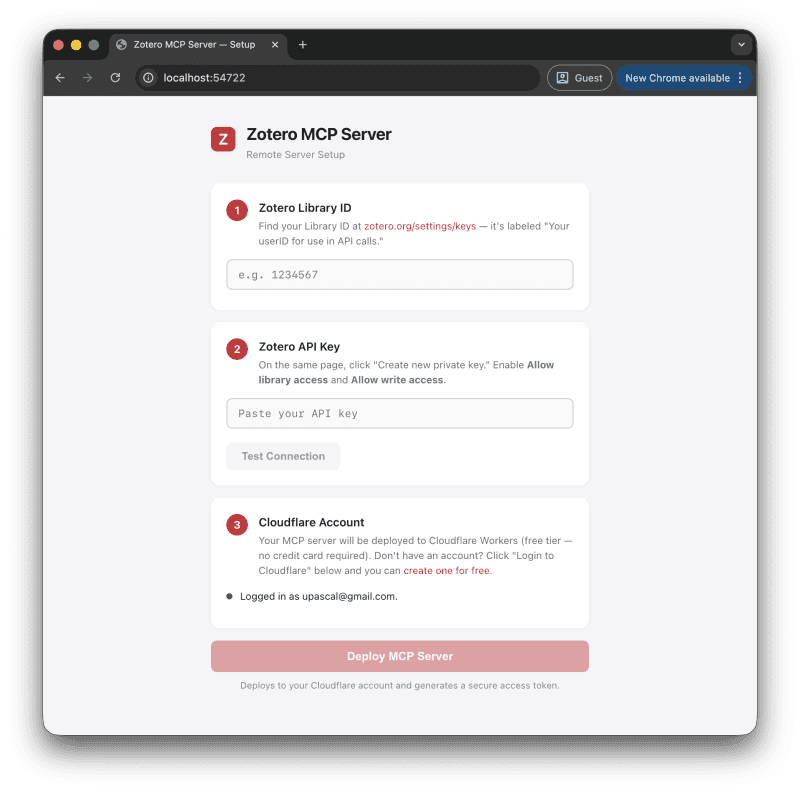
An MCP server that wraps the Zotero web API with agent tools, letting Claude and other chatbots securely read and manage a personal Zotero library — updating metadata, applying tags, and writing summaries.

An early experiment in generative text and images (2022): GPT-2 fine-tuned on scraped Contemporary Art Daily press releases, paired with dalle-mini images that awkwardly attempt to embody contemporary-art English.